
Few body changes generate more frustration, or more predatory marketing, than the midsection weight that shows up around menopause. The frustration is legitimate: many women notice fat redistributing toward the belly through perimenopause and after, often without any change in habits. The marketing is mostly garbage: hormone-balancing teas, flat-belly protocols, and miracle supplements sold directly at that frustration.
What follows is the honest version: what is actually changing, what it does not doom you to, and what genuinely helps, according to research and what we coach every week. One boundary up front: menopause is a medical transition, and questions about hormones, therapy options, or unusual symptoms belong with your physician. Our lane is training and habits, which turn out to be a large lane.

What actually changes at menopause?
A few real things, worth naming plainly:
- Fat storage patterns shift. Declining estrogen changes where the body prefers to store fat, moving the default toward the midsection. This is the redistribution so many women describe, and it is physiology, not failure.
- Muscle loss accelerates. The gradual muscle drift of midlife speeds up through the menopausal transition, and less muscle means less daily energy use and less strength.
- Sleep gets harder for many women, and poor sleep independently pushes appetite and stress in unhelpful directions.
Notice what is not on the list: any switch that makes fat loss impossible or belly fat permanent. The levers that govern body composition still work. The transition moves the starting line; it does not close the track.
Why is strength training the anchor here?
Because it addresses the piece of the puzzle that diets and cardio ignore: the accelerating muscle loss. Strength training through and after menopause defends and rebuilds muscle, which supports daily energy use, protects bone through loading, restores the strength this stage of life keeps drawing on, and changes shape in the way most women actually want, regardless of what the scale does. Pair it with the walking and movement you enjoy, and you have the pattern we laid out in why weight loss after 40 is different, sharpened for this transition specifically. Two to three coached sessions a week is the standard, progressed to your body and history.
What role do habits play?
A large one, applied gently. The pattern that works is not restriction theater; it is protein at every meal to support the muscle project, enough real sleep treated as a health priority rather than a luxury, stress given actual outlets, movement built into ordinary days, and alcohol looked at honestly, since its effects on sleep and appetite both get louder in midlife. Our members get ongoing, evidence-based nutrition and habit guidance rather than a diet handout, because habits built through follow-up are the ones that survive December.
What results are realistic?
Real ones, on an honest timeline. Strength arrives first, usually within weeks. Body composition change, muscle trending up and body fat trending down, typically becomes visible across two to three months of consistent training and habit work, and a monthly InBody scan makes it visible in data rather than mirror-guessing, which matters double here because muscle gained alongside fat lost can hold the bathroom scale perfectly still through months of genuine progress. The scale is the worst possible narrator of this particular story. Composition data, clothes, strength benchmarks, and energy tell the true one.
How do you start?
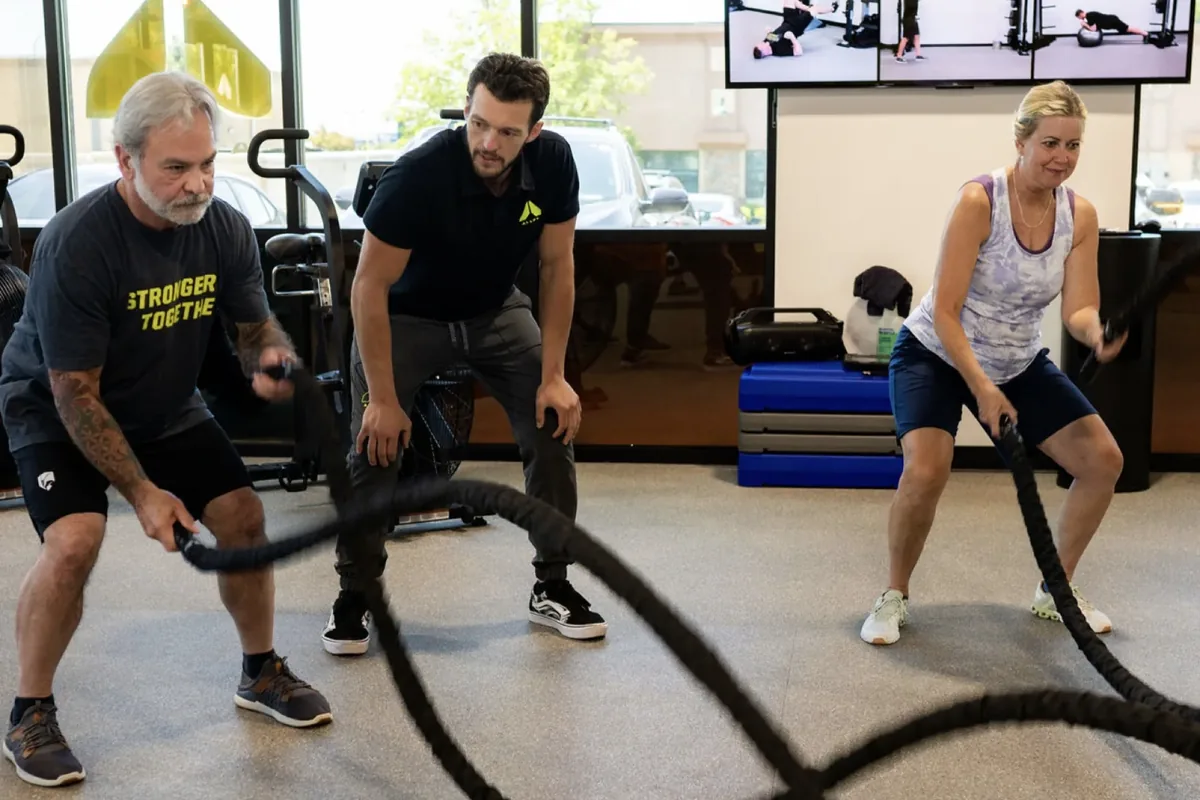
With people who coach this stage of life every day. Most of our members are women and men 40 and over; midlife and post-menopausal women are not the exception in our sessions, they are the room. Your complimentary Starting Point Session at Warner and McClintock covers your history and goals, an InBody baseline, a movement assessment, and a coached introductory workout, with every exercise scaled to you from day one in groups capped at six.
If you are in South Tempe, near Corona del Sol or the Kyrene corridor, Book Your Complimentary VIP Consultation. The transition is real. So is the training response. We would put our members' trend lines up against the marketing any day.