
Pickleball has conquered Tempe the way it has conquered everywhere: the courts at Kiwanis Park hum from early morning, paddles have colonized garage shelves, and half our members seem to have a standing game. As coaches, we love it. It is play, community, and movement in one package, which is the trifecta that keeps people active for decades.
We also see the other side of the boom: the strained calves, the cranky shoulders, the tweaked backs and rolled ankles of enthusiastic players whose bodies were not quite ready for what the game asks. Sports medicine clinics across the country report the same wave. The game is not the problem. The gap between the game's demands and untrained bodies is, and that gap closes in the gym.
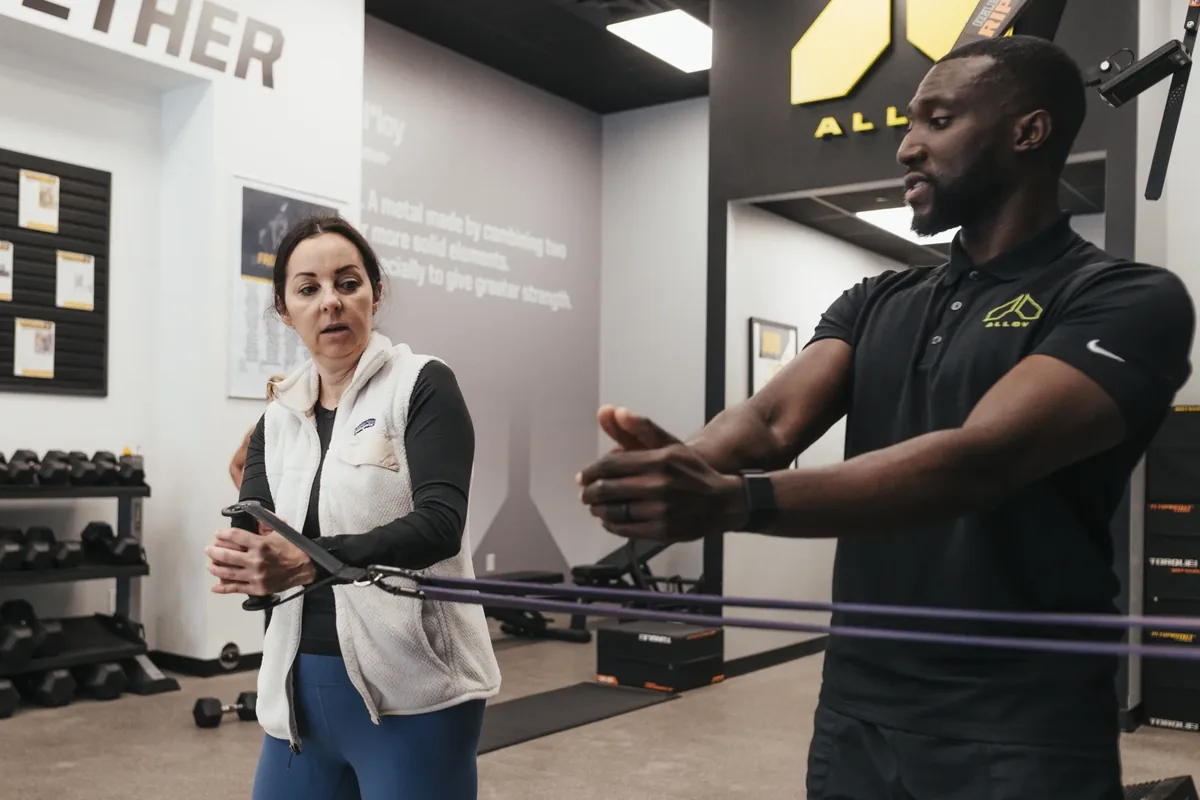
What does pickleball actually demand?
More than its friendly reputation suggests. A competitive point involves explosive first steps in every direction, sudden stops and direction changes, lunges for drop shots, quick rotations, and the occasional undignified scramble backward. Those are athletic events, and they draw on:
- Lateral hip strength, for the side-to-side movement the game runs on and untrained adults rarely practice anywhere else.
- Braking strength, because every sprint to the kitchen line ends in a deceleration, and decelerations injure more players than sprints do.
- Calf and ankle resilience, the site of some of pickleball's most notorious injuries in players over 50.
- Rotational core strength, which powers shots and protects backs.
- Shoulder durability, for the thousands of swings a season quietly accumulates.
Why are the over-50 injuries so common?
Because pickleball is uniquely good at recruiting people back into explosive athletics after a twenty-year gap. The enthusiasm returns instantly; the tissue tolerance does not. Tendons, calves, and hips that have spent two decades at a desk get asked, mid-game and without warm-up, for movements they last performed in a previous era. Sometimes they file a grievance.
The answer is not playing less. It is preparing the body for what the game asks, which is exactly what progressive strength training does: it rebuilds the capacity first, so the court stops being the test you have not studied for.
What does pickleball-ready training look like?
The foundation is the same full-body coached program we build for every member, with the game's demands woven in:
- Split squats, step-ups, and lateral lunges for single-leg and side-to-side strength.
- Controlled lowering work that trains deceleration, the skill of stopping without paying for it.
- Calf work through full range, loaded and progressed, which is cheap insurance for the injury pickleball is most famous for.
- Rotational and anti-rotation core training, for shot power and back protection.
- Rows and presses to keep shoulders durable through a long season.
Two to three sessions a week around your playing schedule, individualized in groups capped at six. Members who add this routinely report the same sequence: soreness after long play days fades first, then movement to the ball improves, then, satisfyingly, the game itself gets better, because power and quickness are trainable at any age we coach.
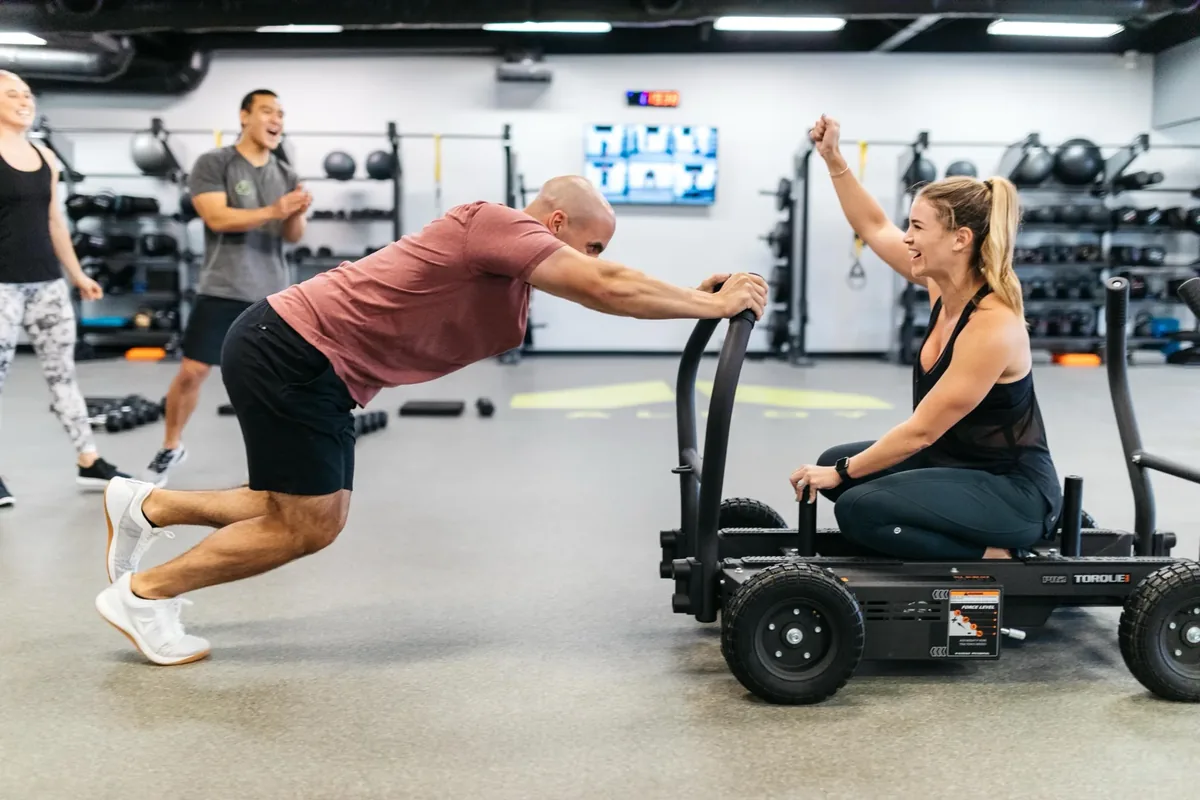
What about warming up and recovery?
The five minutes before play matters: get warm, move through some lunges and arm circles, take a few easy practice rallies before the first full-speed point. Cold explosive starts are where a disproportionate share of injuries happen. Recovery matters just as much: rest days between heavy play blocks, sleep, and the general capacity that comes from training. If something goes beyond soreness into pain, that is a physician or physical therapist conversation first; we coach around whatever they find, which is standard practice in our sessions.
Ready to outlast your opponents?
The players still on the courts at Kiwanis in ten years will not be the ones with the most expensive paddles. They will be the ones whose bodies kept accepting the invitation. That is buildable, starting with a complimentary Starting Point Session at our studio on Warner and McClintock: goals, history, an InBody scan, a movement assessment where we look at exactly the lateral and single-leg qualities the game spends, and a coached workout.
If you are in South Tempe, near Corona del Sol or the Kyrene corridor, Book Your Complimentary VIP Consultation. Then go win the morning bracket.