
Here is exactly what happens at your first personal training session at Alloy Personal Training South Tempe: you arrive, sit down for a conversation about your health history and goals, take an InBody body composition scan, go through a functional movement assessment, try a short introductory coached workout scaled to you, and hear a membership recommendation with no pressure attached. That's the whole flow. You don't need prior experience, special clothes, or to get "in shape" first. If you're over 60 and the unknown is the intimidating part, this walkthrough removes it, step by step.
What happens when you arrive?
A conversation, sitting down, before anything else. Your coach asks about your health history: past surgeries, the knee that complains on stairs, the shoulder you've learned to favor, anything a smart program should know about. Then goals, in plain terms. Most people don't arrive asking for a deadlift number. They want energy for travel, a suitcase lifted into the overhead bin without strategy, a floor they can get down to and up from without planning the route. Say it exactly like that; it's the most useful programming information there is.
Bring the truth, not a performance. A coach programs better around the knee you mention than the one you hide, and nothing you say in that conversation is news to someone who has heard hundreds of versions of it.
Nothing about this part is a test, and nobody is judging the shape you arrive in. Coaches at our South Tempe studio spend most of their day with adults starting exactly where you are.
What is the InBody scan like?
Quick and entirely uneventful. You stand on the device, hold the handles, and in a few minutes it produces a picture of your body composition: muscle mass, body fat percentage, hydration, and related numbers. It's a starting picture, not a grade. Members re-scan monthly, so the changes you make show up in data over time rather than in guesswork. Because we measure it, your program can be steered by what's actually happening.
What does the movement assessment involve?
Simple, everyday movements: sitting and standing from a bench, hinging at the hips, reaching overhead, a look at balance. Your coach watches how you move and notes what's smooth, what's stiff, and what should be trained around for now. There's nothing to prepare and no way to fail. The assessment exists so your first real program starts from your actual body, not from a template.
What about the workout itself?
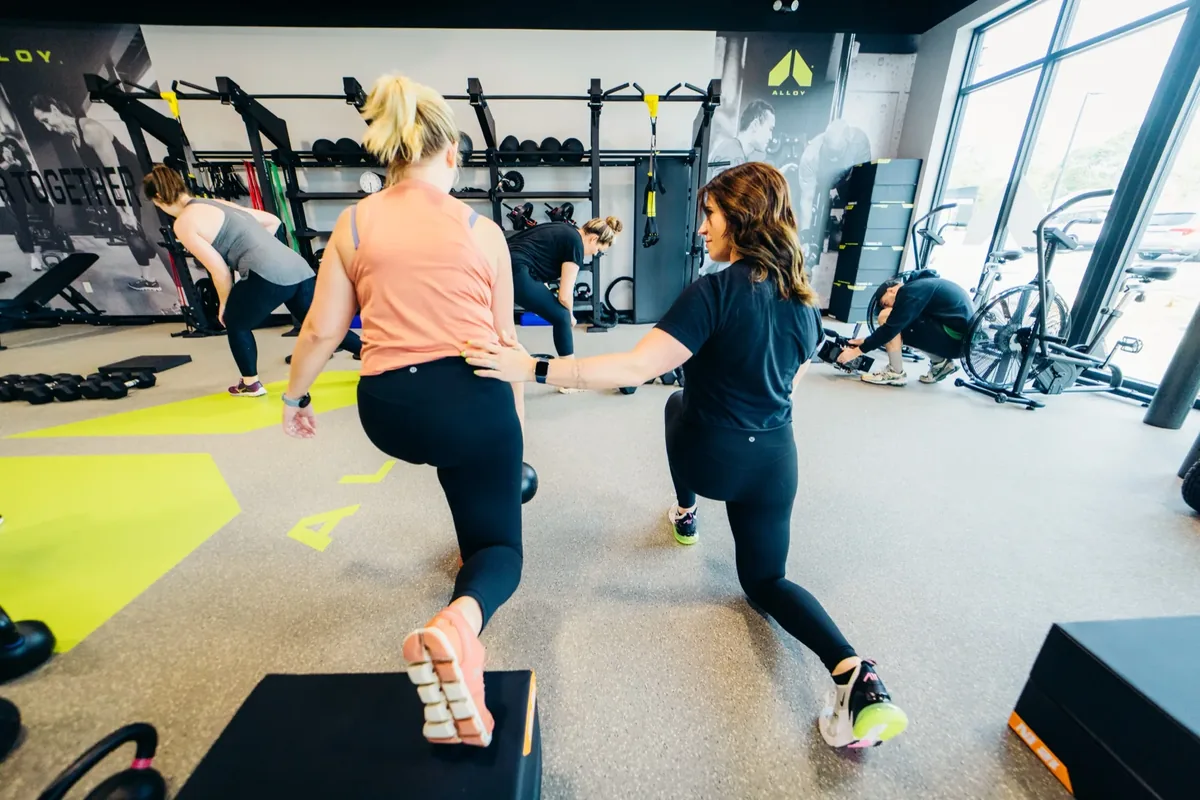
Short, coached, and deliberately scaled to what the assessment just showed. Expect foundational movements, some using supported positions where that's the right starting point, with a coach teaching and watching your form the whole way. The goal isn't to wear you out or prove anything. It's for you to feel what coached training is like: the reps watched, the weights chosen for you, an exercise swapped on the spot if something doesn't feel right.
Expect to be asked, more than once, how something feels. Answer honestly. "Fine" teaches your coach nothing, while "I feel that in my lower back" redirects the next month of programming. The first workout is also where you learn the studio's most useful habit: nothing is sacred about any exercise, and anything can be swapped for a version that fits you today.
What if you're nervous about the whole thing?
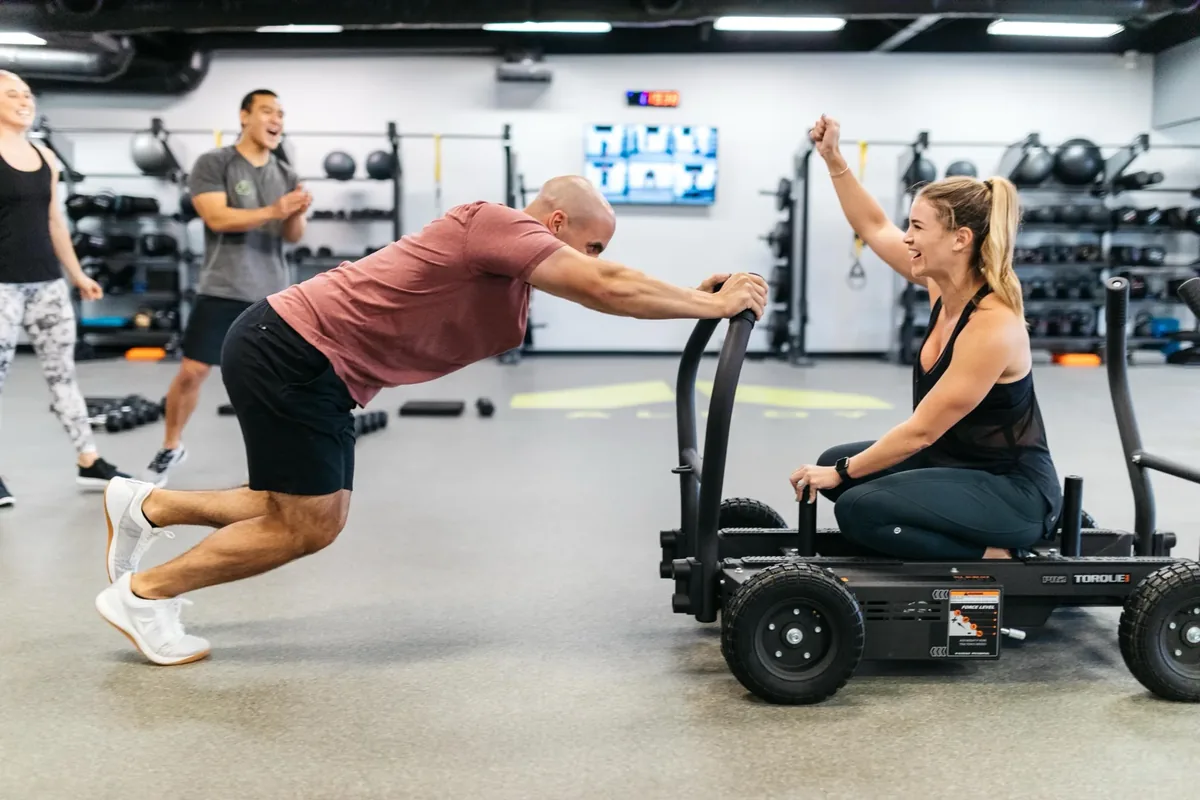
That's the most common arrival state, and coaches know it. The two worries we hear most: "I'll be the least fit person there" and "I'll slow everyone down." Neither survives a first visit. The first session is time with a coach, not a performance for a room, and the members you'd eventually train beside started the same way, mostly in their 50s, 60s, and beyond. Nobody in the building is auditing you. Most people report the same thing afterward: the anticipation was the hardest part of the day.
Key Takeaway
A first personal training session is an assessment, not an audition: a health history and goals conversation, an InBody scan, a movement assessment, a short coached workout, and a no-pressure recommendation. You don't need experience, equipment, or a fitness level to qualify. You just need to show up curious.
What should you bring, and what can you skip?
Bring: comfortable clothes you can move in, supportive sneakers, water, and any questions you've been sitting on. It also helps to know roughly what a typical week looks like for you, since the recommendation at the end is built around your real schedule.
Skip: prior gym experience, technical gear, and any notion of getting fit first. Being "in shape" is not an entry requirement; it's the output. Walking in as a beginner at 60, 65, or 70 is normal here, not remarkable. If the gym environment itself is what's kept you away, we've written about starting the gym at 65, and if you're wondering whether you've missed the window entirely, the short answer is no: it's not too late to start strength training at 60.
What happens after the session?
Your coach recommends a membership based on your goals and how often it makes sense for you to train, explains the pricing for that plan plainly, and then leaves the decision with you. No countdown clock, no expiring discount, and if you'd rather sleep on it, that's a normal answer; the recommendation will still be true next week. If you join, you'll train in sessions capped at six members, on a program built for you, with a support community that learns your name quickly. Most members notice improvements in energy, strength, and confidence within the first few weeks; the point of the first session is simply to start well.
When you're ready to see the studio, Book Your Complimentary VIP Consultation at Alloy Personal Training South Tempe on Warner and McClintock. Everything described above, the conversation, the InBody scan, the movement assessment, and the introductory workout, happens in that single complimentary visit, and you'll leave knowing exactly where you stand and what comes next.