
To lose weight without losing muscle over 60, the plan has four parts: keep strength training two to three times a week while the weight comes down, take a moderate approach to eating rather than a crash one, make protein a priority at each meal, and verify what is actually changing with regular body-composition measurement. The bathroom scale cannot tell you whether the weight leaving is fat or muscle, and at 60-plus that distinction is the whole game. Muscle and strength are your capability for the next 30 years. The point of losing weight is to keep them.
Why does keeping muscle matter more than the scale number?
Ask yourself why you want to lose weight, and the honest answers are usually about capability: hiking without your knees filing complaints, yard work in June heat, luggage lifted into the overhead bin without strategy or hoping for help, keeping up with grandkids, getting up off the floor without a plan. Every one of those runs on strength. A smaller number on the scale that costs you strength moves you away from the actual goal while looking like progress.
That is the quiet failure mode of crash approaches at 60-plus. Cut hard, skip the strength work, and the scale drops fast, but not everything that left was what you wanted to lose. A weight-loss result only counts as a win if you are more capable on the other side of it.
Why is strength training the anchor?
Because strength training while you lose weight is the most reliable way to preserve the strength and muscle you already have. This is not about training more. Two to three coached sessions a week is enough. It is about not removing the strength work at exactly the moment it matters most, which is what most crash plans quietly do when they trade everything for cardio and restriction.
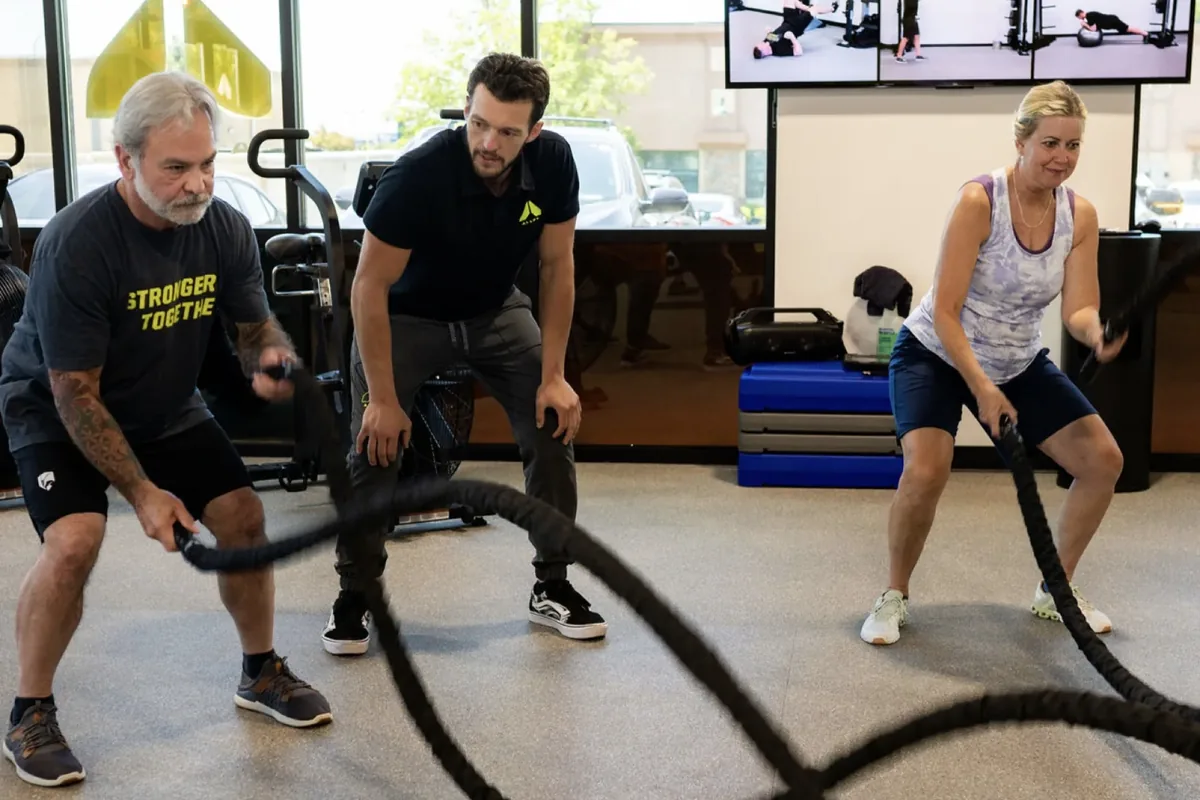
At Alloy Personal Training South Tempe, that anchor is the program itself: sessions capped at six members, led by a professional coach, individualized and progressed per person, at a frequency you can keep through a busy season. The goal during a weight-loss phase is simple to say and worth writing down: the scale trends down while your strength numbers hold or climb.
How should you approach eating?
Moderately, and for longer, instead of severely and briefly. Crash approaches produce dramatic early scale movement and then a rebound. A moderate approach is slower on the scale and far more likely to still be working in six months. We do not prescribe named diets or hand out rigid meal plans. Members receive ongoing, evidence-based nutrition guidance throughout their membership, built around sustainable habits that fit real life, including restaurant weeks and holidays.
On protein: general guidance suggests making protein a priority at each meal, particularly while you are losing weight and training. Nothing exotic. It looks like building breakfast, lunch, and dinner around a solid protein source and letting the rest of the plate follow. Your coach can help make that ordinary and repeatable rather than a project.
Key Takeaway
Losing weight after 60 only counts as a win if you are stronger and more capable on the other side of it. Keep strength training two to three times a week while you lose, take a moderate approach to eating, make protein a priority at each meal, and check monthly that the weight leaving is the weight you wanted to lose.
How do you know what you are actually losing?
Because we measure it. The scale reports one number and hides the composition behind it, so members at our Tempe studio take a monthly InBody body composition scan, which shows muscle mass, body fat percentage, and how each is trending. If body fat is falling while muscle holds, the plan is working and nothing needs to change. If muscle is sliding, your coach sees it within a month, not a year, and adjusts training or habits before the loss gets expensive. No guessing, and no arguing with a bathroom scale.
Expect the honest pace, too: most members notice energy and strength improving within the first few weeks, with visible body-composition change typically showing over 8 to 12 weeks. Slower than an infomercial, faster than another year of on-again, off-again.
What are the common mistakes to avoid?

Three patterns account for most of the muscle people lose along with the weight:
- Cutting hard for a deadline. Severe restriction produces fast scale movement, takes muscle with it, and then hands the weight back after the event. Moderate and sustained wins by a wide margin.
- Trading strength work for extra cardio. More time on the treadmill feels productive during a weight-loss push, but it does not preserve strength, and preserving strength is the whole assignment.
- Judging a month of honest work by one morning on the scale. Daily readings are noisy and say nothing about composition. Judge the monthly scan and your strength numbers instead.
Where does cardio fit?
As a supporting player, not the anchor. Walking, swimming, cycling, pickleball: enjoyable movement on non-training days adds activity and is worth keeping for its own sake. What it cannot do is stand in for strength work while you lose weight. We have written up why cardio-only weight loss after 60 tends to disappoint if you want that fuller argument. And if this whole project feels different than it did at 40, that is not your imagination either: weight loss changes after 40, and the playbook changes with it.
If you want a plan built around keeping your strength while the weight comes down, start with data. Book Your Complimentary VIP Consultation at the Alloy Personal Training South Tempe studio on Warner and McClintock: a health history and goals conversation, an InBody body composition scan, a functional movement assessment, and an introductory coached workout. You will leave knowing your actual starting composition and what a sensible plan looks like, and you can read how the program works before you come in.