
There is a word for what happens to muscle in the second half of life, and most people first hear it from a doctor, usually later than they would have liked: sarcopenia. It means age-related loss of muscle mass and strength, and it is one of the most consequential and least discussed changes in human aging.
Here is the part that deserves to be famous: sarcopenia is remarkably responsive to training. Of all the things that come with the decades, muscle loss is among the most fixable, at nearly any age, from nearly any starting point. We watch it happen in reverse every week at our South Tempe studio. This guide covers what sarcopenia is, why it matters so much, and exactly what fighting it looks like.
What is sarcopenia?
Sarcopenia is the gradual loss of muscle mass, strength, and function that comes with age when muscle is not actively maintained. It starts earlier than most people expect, with slow declines beginning in the 30s and 40s, and it accelerates in the 60s and beyond. Because it is gradual, it hides. Nobody wakes up weaker on a Tuesday. Instead, over years, the suitcase gets heavier, the stairs get longer, and the floor gets farther away, and it all gets misfiled under normal aging.
Some of it is normal aging, in the sense that untrained muscle does drift away with the decades. But the size of the drift is not fixed. The largest share of what most people experience as aging is really detraining: muscle that was never asked to stay.
Why does muscle loss matter so much?
Because muscle is quietly load-bearing for almost everything:
- Independence. Standing from a low chair, climbing stairs, getting off the floor, carrying groceries: all muscle events. Enough loss and daily life starts requiring assistance.
- Balance and falls. Weak legs and hips are a major ingredient in falls, and falls are among the biggest health threats after 65.
- Metabolic health. Muscle is where much of the food you eat gets used. Losing it worsens the numbers doctors track, from blood sugar on down.
- Resilience. Illnesses, surgeries, and hard seasons all draw down your reserves. Muscle is the reserve. People with more of it recover better, and researchers keep confirming it.
Can sarcopenia actually be reversed?
To a meaningful degree, yes, and this is the best news in this entire field. Resistance training studies on adults in their 60s, 70s, and 80s, including people who had never trained, consistently show significant gains in strength and muscle within a few months. The adaptation machinery does not shut off. It waits.
We wrote about the starting question in is it too late to start at 60, and the answer holds here: the response to training is real at every age we coach. What changes with age is only the importance of doing it well, progressively, and consistently.
What does anti-sarcopenia training look like?
It has a short recipe, and every ingredient matters:
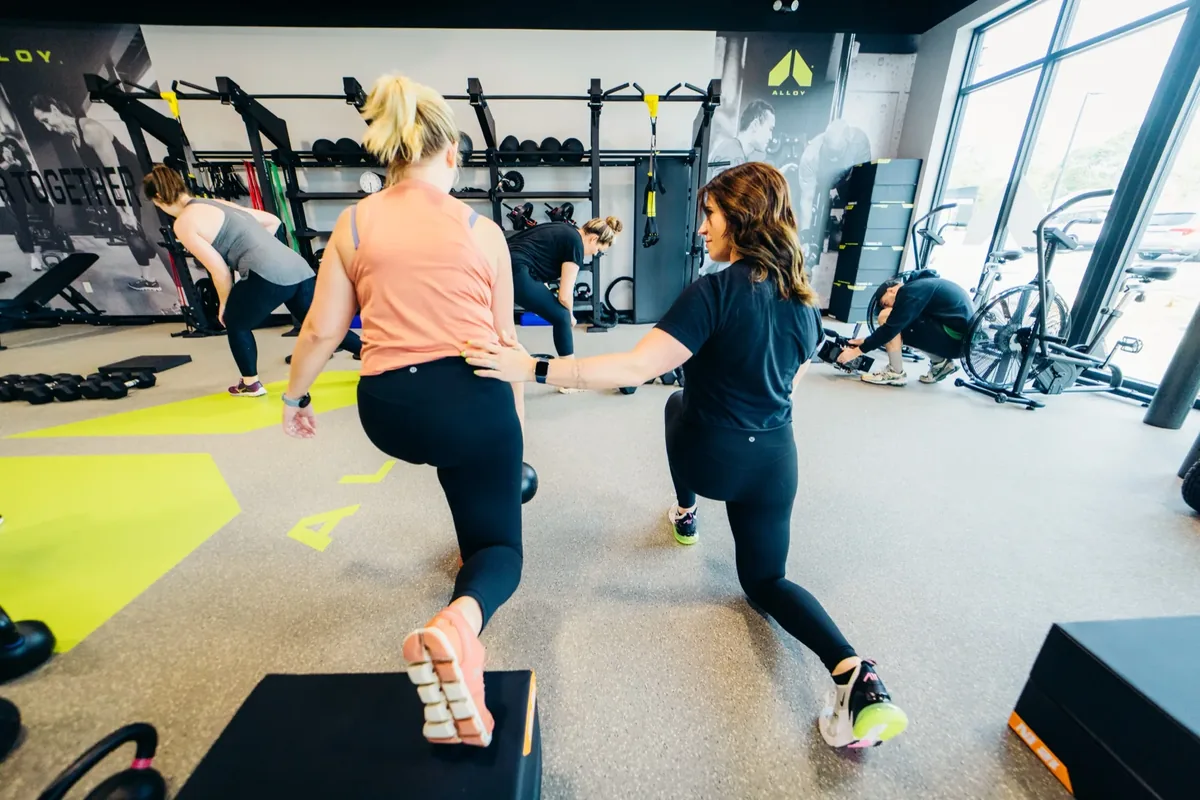
- Progressive resistance training, two to three times a week. Muscles keep what they are asked to use. Squats, hinges, presses, rows, and carries, scaled to your body and gradually progressed, are the ask.
- Enough protein. Older adults need more protein than the general guidance most of us grew up with, spread through the day, to give training something to build with. Appetite often declines exactly when protein matters most, so it takes intention.
- Consistency measured in years. This is maintenance of the most valuable asset you own, not an eight-week project.
- Measurement. A monthly InBody body composition scan tracks muscle mass directly, so you can watch the trend move the right direction instead of guessing.
Why coached training specifically?
Because the recipe fails at the details. Loads that never progress do not signal muscle to stay. Loads that progress carelessly aggravate old joints and end the project early. The productive middle, challenge without harm, is precisely what a coach watching your reps provides, and it is why our sessions are capped at six members with every exercise individualized. Most of our members are adults 40 and over; plenty started in their 60s and 70s with decades of not-training behind them, and their InBody trend lines are the counterargument to everything sarcopenia is supposed to inevitably do.
Where do you start in Tempe?
With a baseline. Your complimentary Starting Point Session at our studio on Warner and McClintock includes an InBody scan, which shows your current muscle mass in actual numbers, a functional movement assessment, a conversation about your history and goals, and a coached introductory workout. From there, the fight against sarcopenia is scheduled two to three times a week, with people who know your name.
If you are in South Tempe, near Corona del Sol, along the Kyrene corridor, or across the Chandler border, Book Your Complimentary VIP Consultation. The drift only wins if nothing pushes back.