
Small group personal training and one-on-one training sell the same core product, a professional coach building and watching your training, at very different prices. The honest comparison: one-on-one wins on privacy, fully custom scheduling, and situations that need a coach's undivided attention, such as working around an injury with your physical therapist's blessing. Small group wins on cost per session, the training frequency you can actually afford, and built-in accountability. And the tiebreaker isn't which format is better in theory. It's which one you'll still be attending two to three times a week a year from now.
What's actually different between the two formats?
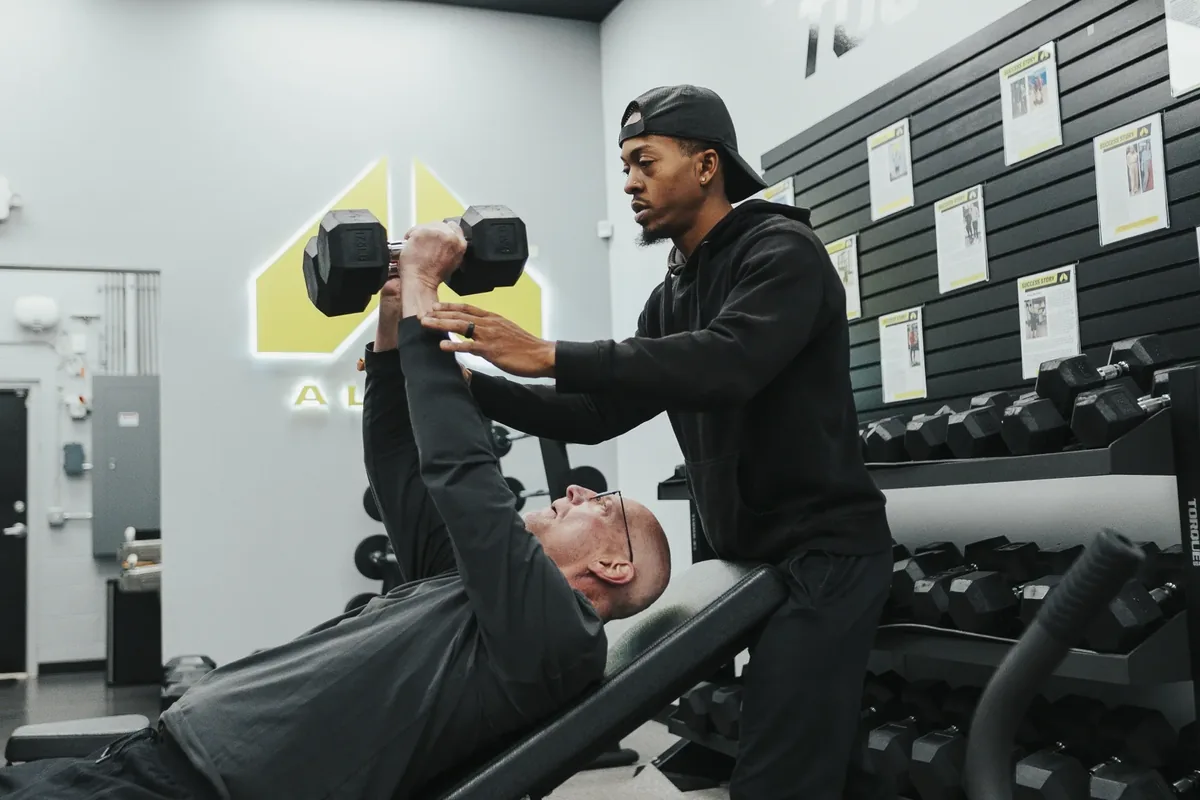
In one-on-one training, you buy all of a coach's time: undivided attention, a session built entirely around you, scheduled whenever you both agree. In small group personal training, a coach leads a capped handful of members, each following their own program at their own station, with the coach moving between them to teach, correct, and progress.
Price follows structure. In one format you're paying for exclusivity; in the other you're paying for the same coaching and splitting the overhead. Neither is a trick. They're just different answers to the question of what a coach's time costs and who covers it.
The word doing the work is "capped". At Alloy Personal Training South Tempe the cap is six members. That's few enough for the coach to watch your form and modify your session in real time, which is the line between personal training in a shared room and a group class with better marketing.
Picture the room during a small group session: six stations, six different programs, one coach circulating. The member next to you might be pressing dumbbells while you work through a supported row; the coach cues your setup, watches your first reps, adjusts the load, then moves on and circles back. Multiply that across a session and you've been coached dozens of times without ever having the room to yourself.
Where does one-on-one training genuinely win?
- Rehab-adjacent situations. If you're returning from an injury or surgery and your physical therapist has cleared you to train with constant modification, a coach's undivided attention is worth paying for, at least for a season.
- Privacy. Some people focus better, or simply feel better, with no one else in the room. That's a legitimate preference, and only one format honors it.
- Fully custom scheduling. One-on-one bends around your calendar. Small group sessions run at posted times, and if your week genuinely can't meet a schedule, the flexibility premium may be worth it.
If two or more of those describe you, one-on-one is probably your format, and it's worth its market price.
Where does small group personal training win?
- Cost per session. One-on-one training is commonly advertised at roughly $80 to $120 or more per hour. A capped group splits the cost of that coaching, dropping the per-person price to a fraction without changing what the coach actually does.
- Frequency you can afford. Results live at two to three sessions a week, sustained for months. Small group pricing makes that schedule a normal budget line instead of a luxury.
- Built-in accountability. A coach who knows your name and five members who notice when you're missing beat willpower on the weeks you'd rather skip. What you're buying is a coaching relationship with a support community attached.
- Individualized coaching, still. With six members, your program is still yours: assessed first, progressed per person, modified the moment something doesn't feel right.
Notice that none of those advantages depend on the coaching being diluted. They depend on the cap holding. Six is few enough to coach, and it's the number the whole model stands on.

Key Takeaway
One-on-one training earns its price for privacy, rehab-adjacent needs, and fully custom scheduling. Small group personal training wins on cost, affordable frequency, and accountability, while keeping coaching individualized at a six-member cap. The best format is whichever one you'll actually attend two to three times a week for a year.
Which format produces better results?
The one you show up for. For most people, small group ends up the better answer, but the reasoning matters: not because the coaching in the room is better, but because the economics let you attend often enough for the coaching to compound. A brilliant program at once a week loses to a good program at three times a week, and it isn't close. If your budget makes one-on-one a once-a-week proposition, that's the comparison you're actually making.
Be honest about the accountability question too. If nobody notices when you skip, you will eventually skip; most of us do. The support community around a small group isn't a nice-to-have. For consistency over a year, it's often the deciding feature.
There's also a version of this decision that isn't either-or. Some people start with a season of one-on-one attention around a specific limitation, then move into small group training once the movement is solid. The formats are tools, not identities.
How do you decide?
Run the numbers on a month, not a session; we've laid out what a realistic monthly personal training budget looks like. Then vet whoever you're considering, in either format, with our guide to choosing a personal trainer: credentials, an assessment-first process, and an honest cap on group size. Whichever way you lean, insist on the same fundamentals; the format changes the price, not the standard. You can also see how small group personal training works at our studio.
Or settle it in person at Alloy Personal Training South Tempe. Book Your Complimentary VIP Consultation at our studio on Warner and McClintock: a health history and goals conversation, an InBody body composition scan, a functional movement assessment, and an introductory coached workout. You'll feel what coached-but-shared training is like firsthand, hear a recommendation matched to your goals, and decide with real information instead of a pricing page. In Tempe you have both formats within a short drive; one visit tells you more than any comparison post.