
Doctors have blood pressure cuffs and lab panels. Researchers who study aging have something humbler: a chair, a floor, a flight of stairs, and a stopwatch. Some of the most reliable predictors of how independently a person will live in their 70s and 80s are not high-tech scans. They are simple physical tests you can try in your living room this afternoon.
Here are five worth knowing, what they predict, and the honest good news: every single one of them is trainable.
Test one: Can you stand from a chair without using your hands?
Sit in a standard chair, arms crossed over your chest, and stand up. Then sit back down and repeat. The researched version counts how many times you can do it in 30 seconds; for adults in their 60s, the ballpark to beat is around 12 to 14 clean repetitions.
Why it matters: chair rises are concentrated leg strength, and leg strength is the currency of independence. Toilets, car seats, couches, and restaurant booths all charge the same toll. When researchers track who ends up needing assistance, slow chair-stand times are one of the loudest early warnings.
Test two: Can you get up off the floor?
Sit down on the floor, then stand back up, using as little support as possible: every hand, knee, or piece of furniture you touch costs points. This test earned fame when researchers found that adults who needed the most support getting up had markedly worse long-term outcomes than those who rose easily.
Why it matters: beyond the headline statistics, there is a practical one. Most falls are not catastrophic in themselves; the trouble often starts when a person cannot get up afterward. Floor-to-stand ability is also the gateway to a life that includes grandchildren on rugs, gardening, and picnics. It is strength, mobility, and confidence in one movement, and it responds beautifully to training.
Test three: How is your grip?
Grip strength keeps appearing in longevity research as a stand-in for total-body strength, so much so that some researchers call it a biomarker of aging. No dynamometer at home? Use proxies: opening stubborn jars, carrying both grocery bags from the car in one trip, hanging onto a railing confidently.
Why it matters: a weak grip is rarely just a hand problem. It reflects the whole chain, shoulders and back included, and it quietly decides whether carrying, opening, and holding stay easy. The fix is not squeezing a stress ball; it is picking up and carrying meaningfully heavy things, which trains the grip along with everything attached to it.
Test four: Can you climb a flight of stairs without stopping?
One steady flight, no pause, no hauling yourself up by the railing. Breathing harder at the top is fine; needing the railing to do the lifting is the signal worth noticing.
Why it matters: stairs combine leg strength, single-leg stability, and cardiovascular capacity, the same blend daily life demands at curbs, slopes, and stadium seating. Researchers use stair-climb performance to estimate functional decline for good reason: it is ordinary life, concentrated.
Test five: Can you stand on one leg for 10 seconds?
Shoes off if you like, near a counter for safety, lift one foot and count. Ten seconds per side is the researched threshold that separated meaningfully different outcomes in a large middle-aged and older cohort.
Why it matters: single-leg stance is your fall-prevention system reporting for duty, the same system we covered in balance and fall prevention. Every step you take is a brief single-leg stand; walking is just passing the test repeatedly.
What if you did not love your results?
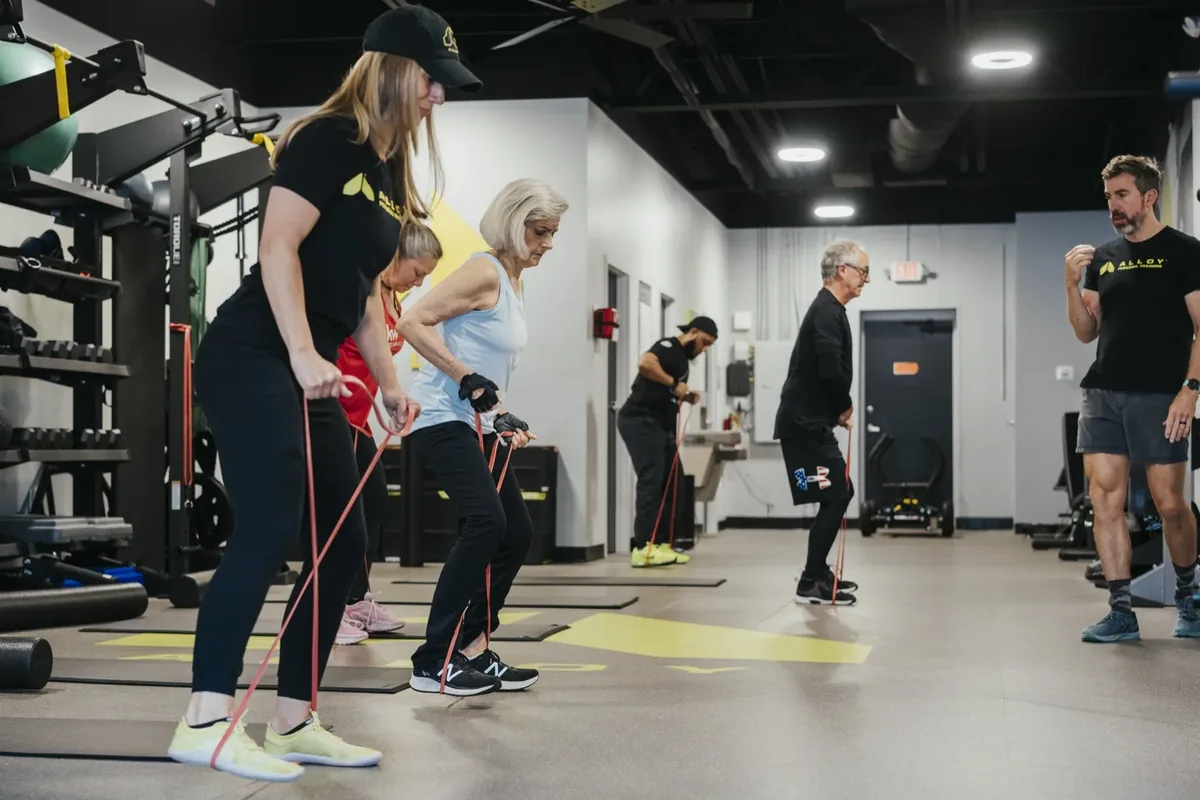
Then the tests did their job, and here is the part that matters more than any score: all five measure trainable capacities. Chair stands improve with squats and step-ups. Floor get-ups improve by practicing floor get-ups, with a coach breaking the movement into learnable pieces. Grip grows with carries, stairs with leg strength and conditioning, balance with the single-leg work built into sensible programming. The whole menu lives inside the functional fitness approach we train every week.
Improvement comes faster than most people expect, too. Strength in previously untrained adults over 60 responds within weeks, and the tests above usually follow.
Want your real baseline, measured properly?
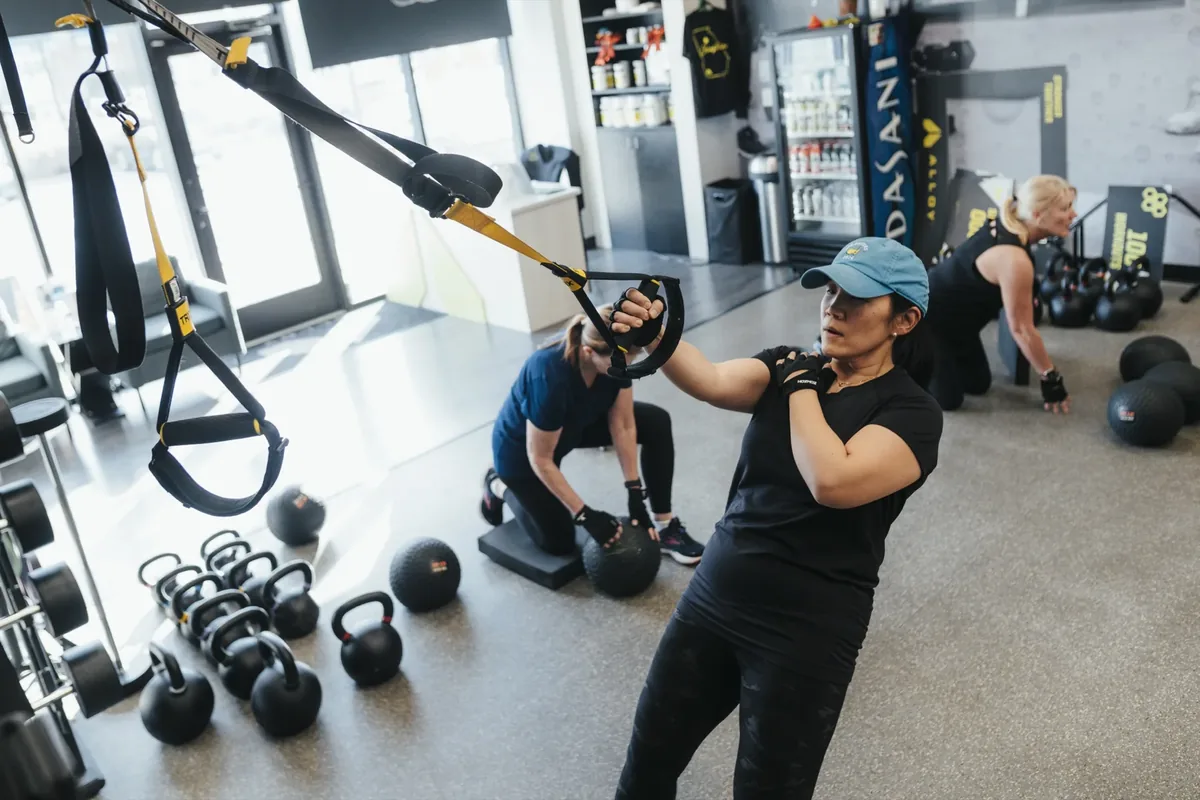
Your first visit to our South Tempe studio is a Starting Point Session: a conversation about your goals, an InBody scan, a functional movement assessment that includes exactly these kinds of capacities, and an introductory coached workout. You leave knowing where you stand, literally, and what the plan is to raise every number that needs raising.
We are on Warner and McClintock, an easy drive from the Kyrene corridor and the Corona del Sol area. Book Your Complimentary VIP Consultation and come take the tests with a coach who knows what to do about the results.