
Search "aging in place" and you will find an industry of home modifications: grab bars, stair lifts, walk-in tubs, ramps. All useful things, in their time. But scroll through those checklists and notice what is missing from nearly every one: any mention of the person doing the aging.
Here is the reframe we offer members: the house is the backup plan. The primary plan is the body. Every year you keep the strength to climb your own stairs, rise from your own chairs, and carry your own groceries is a year the equipment list stays short. And unlike the bathroom remodel, the body responds to investment at any age.
What physical abilities actually decide independence?
Researchers who study this converge on a surprisingly short list, and none of it is exotic:
- Standing up from chairs, beds, and toilets without assistance
- Walking far enough and steadily enough for errands and parking lots
- Climbing a flight of stairs
- Carrying meaningful loads: groceries, laundry, a grandchild
- Catching yourself when balance is challenged, and getting up if it fails
Look at the list again and a theme emerges: every item is strength expressed through ordinary movement. This is why leg strength keeps showing up in aging research as one of the strongest predictors of who stays independent. Not flexibility, not step counts, strength, and particularly the lower-body kind that sarcopenia spends two decades quietly collecting, as we detailed in our muscle loss guide.
How much strength is enough?
More than bare minimum, because life demands margin. The day that tests your independence is rarely an average day. It is the flu that costs you a week of eating, the icy sidewalk visiting family up north, the stomach bug, the long recovery after a procedure. Each one makes a withdrawal from your strength account, and the people who absorb those withdrawals are the ones who banked a surplus first.
Researchers describe this as physical reserve: capacity beyond daily needs. Training past "good enough for today" is how you buy insurance for the day that is not today. A useful honest measure of where you stand is the set of simple benchmarks in our five independence tests post: chair stands, floor get-ups, stairs, carrying, single-leg balance.
Is it too late to build that reserve?
No, and this is the best-documented good news in the field. Strength training studies in adults in their 60s, 70s, 80s, and even 90s consistently show meaningful gains: muscle rebuilt, chair-stand times improved, walking speed up, confidence following close behind. The body's ability to adapt to resistance training never closes; it only waits for the request.
Starting earlier is better, the way starting any savings account earlier is better. But the research on late starters is unambiguous: the returns show up whenever the deposits begin. We made the full case in starting the gym at 65.
What does independence training actually look like?
It looks like strength training with its priorities straight:
- Legs first. Squats to a box, step-ups, supported single-leg work. The chair-and-stairs muscles get primary billing.
- Carries and grip. Loaded walks that train the grocery-and-grandchild system.
- Hinge patterns. Picking things up from the floor safely, practiced with weights so life's versions feel light.
- Balance woven throughout, under a coach's eye.
- Progression, always. The load creeps up as you adapt, which is the entire difference between exercise that maintains and training that builds.
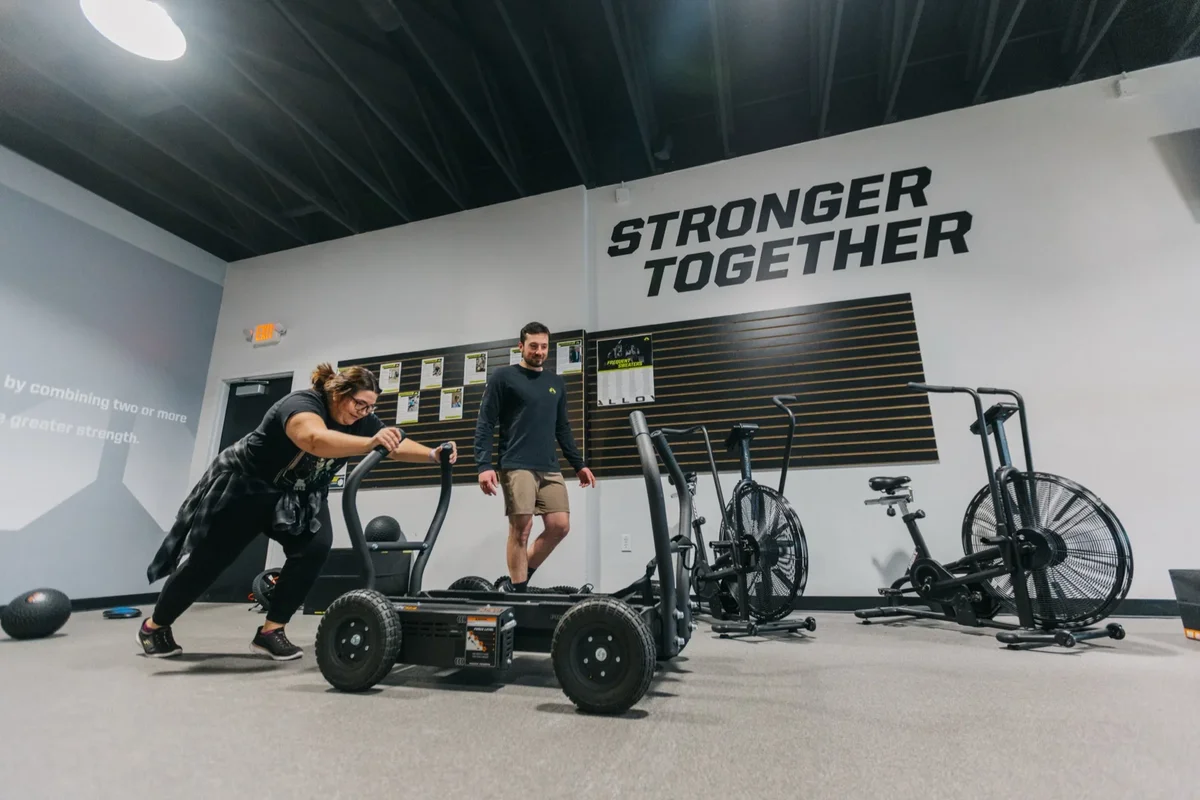
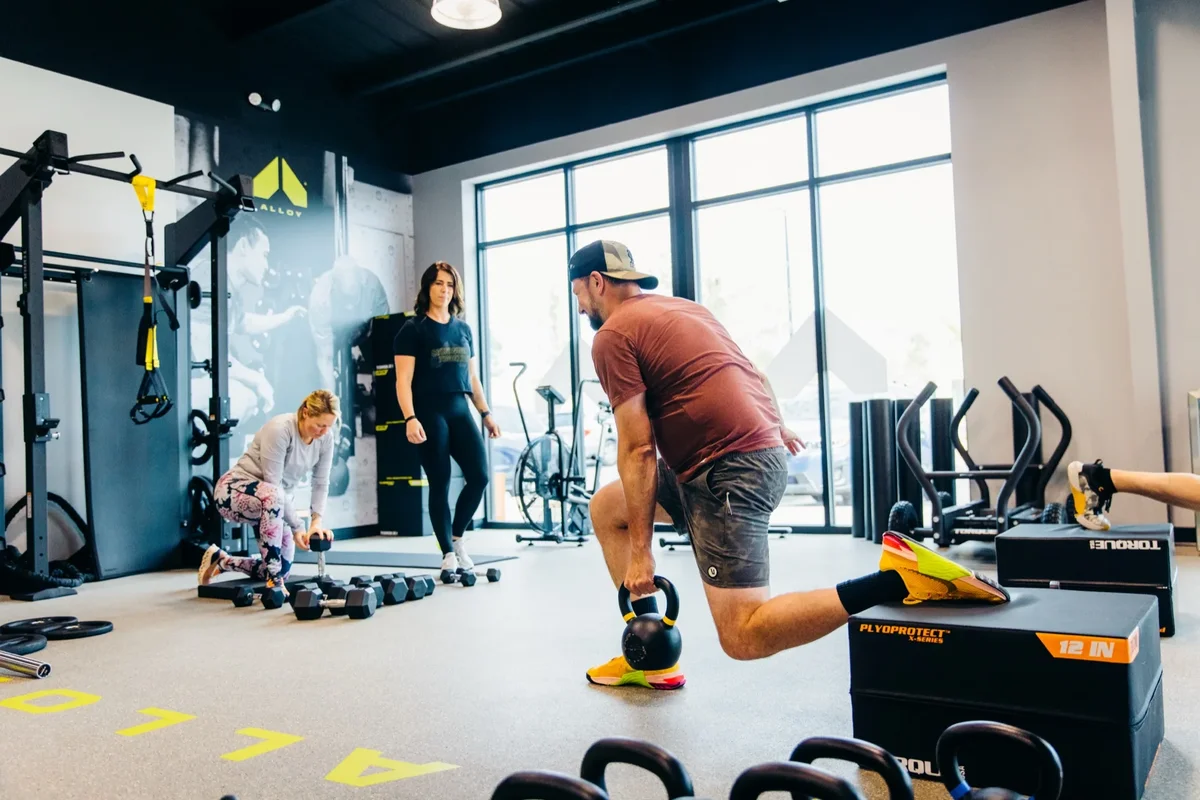
In our studio this happens in sessions capped at six, with a coach choosing every load and watching every rep. The format matters for this population especially: heavy enough to build reserve, watched closely enough to stay safe, and social enough that people actually keep coming, which is the variable that decides everything else.
What is the first step?
A baseline. Your first visit to our South Tempe studio on Warner and McClintock is a Starting Point Session: a conversation about your goals and your current daily life, an InBody scan measuring the muscle this whole plan is built on, a movement assessment, and an introductory coached workout.
Whether you are planning two decades ahead or responding to a wake-up call, the path is the same: start banking strength now, so the house never has to compensate. Book Your Complimentary VIP Consultation. The grab bars can wait.