
It usually arrives as a small shock at a doctor's visit: the height on the chart is less than the height you have given on forms your whole adult life. Or it is a photograph, taken from the side, showing a curve in the upper back you do not remember agreeing to.
The standing-shorter, rounding-forward drift of aging feels like fate, and some fraction of it is structural. But a surprisingly large share of it is muscle: specifically, the strength that holds your frame upright, which fades quietly when it goes untrained. That share is recoverable, and recovering it changes more than photographs.
Why do we get shorter and rounder with age?
Three contributors, in rough order of how much say you have over them:
- The discs between your vertebrae lose water content over the decades and flatten slightly. This accounts for some genuine height loss and is largely structural.
- Bones change. Bone density loss can allow vertebrae to compress, which is one reason height loss is worth mentioning to your doctor rather than just your tailor.
- Muscle stops holding you up. This is the big, trainable one. The chain of muscles along your upper back and shoulders works all day against gravity's suggestion to slump. When those muscles weaken, gravity's suggestion becomes your default shape: head drifting forward, shoulders rounding, upper back curving.
Here is the encouraging part of that list: the posture most people are unhappy with in the mirror is mostly item three, and item three responds to training at any age.
What does weak posture actually cost?
More than appearance. A forward-drifted posture moves your head's considerable weight out in front of your spine, which your neck and upper back then carry like a bowling ball held at arm's length: hello, tension and end-of-day aches. It compresses the chest's room to breathe. It shifts your balance point forward, which the fall-prevention research notices. And studies of older adults keep finding that upright posture tracks with confidence, how others perceive your age, and how you perceive yourself.
Posture is also a strength signal to the world and to you. Standing tall is, in a literal mechanical sense, a strength act, performed continuously. That is why it belongs to training.
Which exercises rebuild an upright frame?
The ones that strengthen everything on the back of you, plus the deep trunk that stabilizes it:
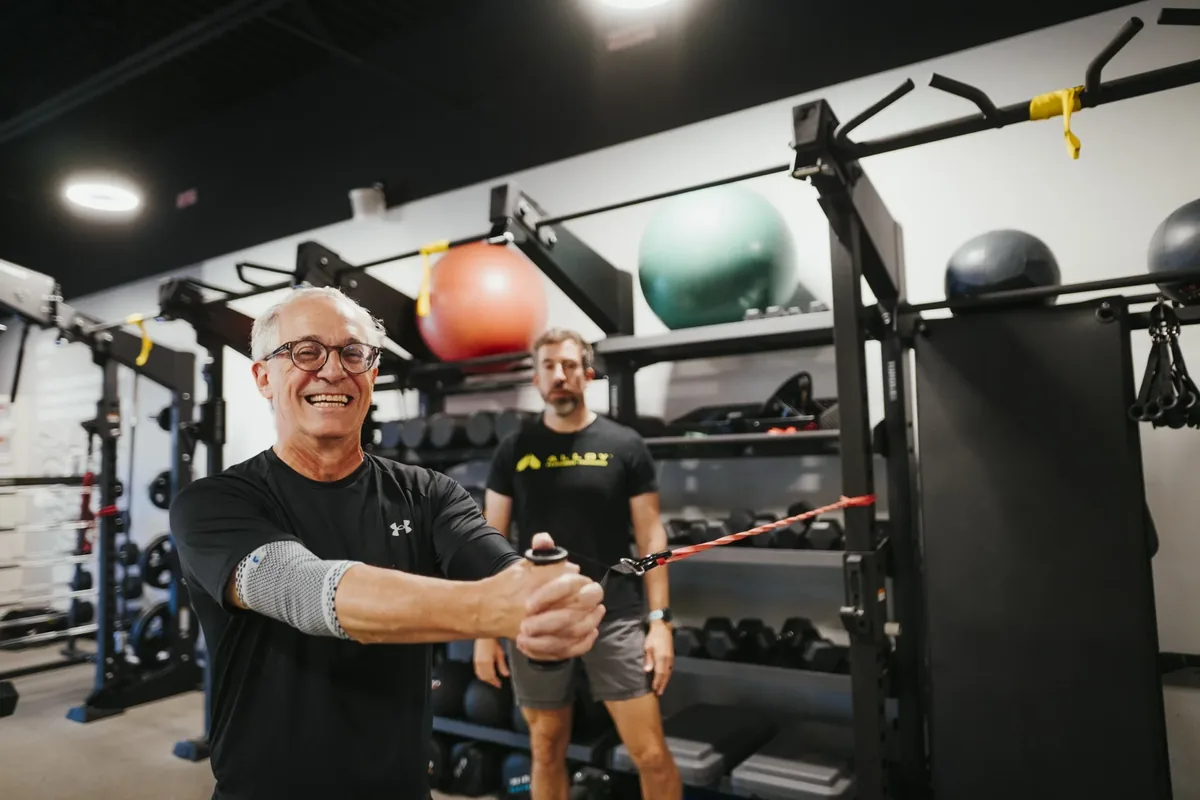
- Rows, in every variation. The single most valuable posture family: they strengthen exactly the muscles that pull shoulders back where they belong.
- Carries, done tall. A farmer carry is posture practice under load; you cannot slouch and carry well at the same time. The same carries anchor the core training we covered recently, because the systems are the same system.
- Hinge patterns. Deadlift variations teach the hips to bear load while the spine holds its shape, building the entire back line.
- Upper-back extension work. Controlled movements that ask the rounded zone of the upper spine to remember its range.
- Overhead reaching, restored gradually. Reaching tall is both the test and part of the cure.
What a program of this kind does over months is reintroduce your body to its full height. Members routinely report the cues from the outside world: a relative who says you look taller, a shirt fitting differently across the shoulders, the rear-view mirror needing adjustment upward. Small mirrors, real change.
Can training reverse height loss?
Honest answer: it depends on the source. Height lost to disc changes does not return. Height lost to slumping, the postural fraction, often does, and for many people that fraction is substantial: standing at your full available height can recover visible centimeters compared with your habitual slump. More importantly, training defends the height you have, both by holding the frame upright and by the bone-loading benefits of resistance work, which is a topic to raise with your doctor if height loss has been rapid, since that pattern deserves medical eyes first. It pairs naturally with the independence capacities in our five tests post; tall and strong travel together.
How do you start standing taller?
Not with reminders to sit up straight; willpower loses that argument by 10 a.m. You start by building the muscles that make upright the easy position instead of the effortful one.
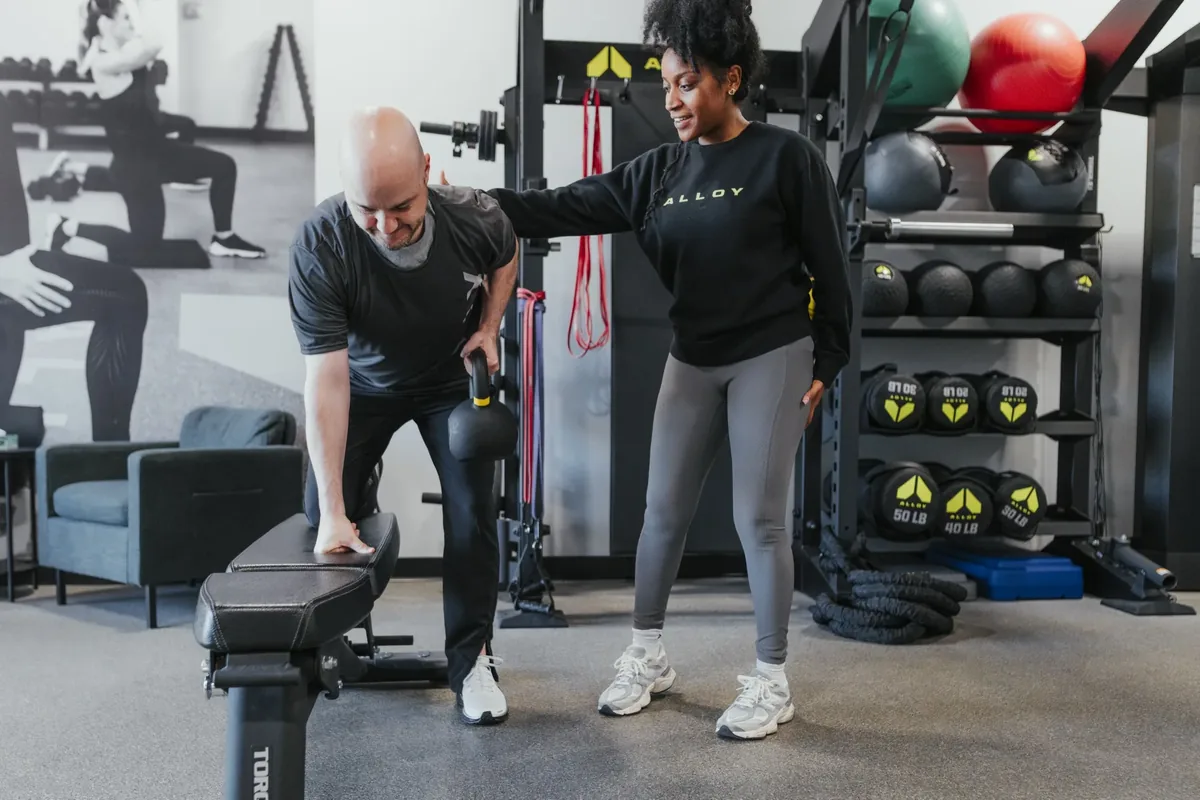
Your first visit to our South Tempe studio on Warner and McClintock is a Starting Point Session: a goals conversation, an InBody scan, a movement assessment that looks specifically at how you stand, reach, and carry, and an introductory coached workout. Rows and carries from day one, scaled to you, in sessions capped at six where someone is always watching your position. Book Your Complimentary VIP Consultation. Stand tall for the first photo; we will handle the rest of them.